Consulting on the testing of sight
Yesterday, Council approved a consultation package on proposals to update the GOC’s 2013 position statement on the testing of sight as well as options to amend our standards of practice on supervision and delegation.
The consultation will address two main issues:
- Delegation of some parts of the sight test
- Separation of the sight test by time, person and/or place
Let me take each in turn.
Delegation of parts of the sight test
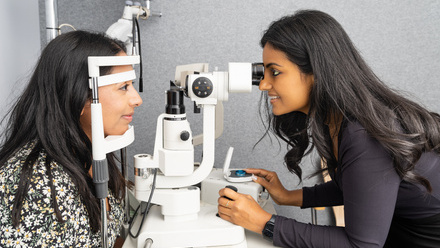
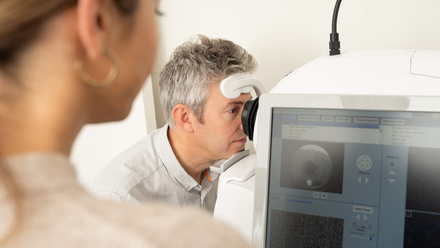
Sight testing has evolved significantly over the past decade, making the 2013 position statement no longer reflective of current practice. Technological advances have transformed how many routine procedures are carried out. Tests for intraocular pressures, visual field assessments, autorefraction, and retinal imaging are now commonly performed by trained support staff rather than the optometrist themselves.
Our engagement with professional experts revealed a clear consensus: each of these tasks can be effectively and safely delegated to dispensing opticians or appropriately trained non-registrants, allowing optometrists to focus more on clinical decision-making and patient care.
The changes we are proposing confirm that an optometrist may delegate some parts of the sight test to a suitably trained person provided the optometrist remains in overall control of the process and oversees the tasks being carried out. Our proposals here reinforce the central role of the optometrist in sight testing and reflect modern clinical practice. Optometrists will not need to do anything differently when carrying out a sight test because of our proposals.
Separation by time, person and/or place
Legislation permits separation of the components of the sight test by time, person and/or place, and does not restrict the type of equipment, products or technology that can be used by registrants when carrying out a sight test.
We know that in recent years, new formats of delivering sight tests have emerged – teleoptometry stands out as a prominent example. For some, it represents a valuable step forward offering greater access to care, improved convenience for patients, and for optometrists, greater opportunities for flexible working. Some eye care professionals, however, have expressed concerns about the limitations of the technology for diagnosing eye conditions and worry about the potential long-term implications for the future of the profession given the rapid pace of technological developments and its use in optical practice.
Our review of these issues has included commissioning research with professionals and a literature review of the latest evidence, research with patients and the public, observing teleoptometry in practice, convening a stakeholder roundtable and discussions with our advisory committees. In proposing updates to our position statement on the testing of sight and revisions to our standards of practice, we want to provide clarity for registrants by setting out the relevant legislation, support responsible innovation in sight testing formats and increase public protection by putting appropriate safeguards in place.
In seeking to strike the right balance, our overall approach is to set out a broad regulatory framework within which registrants can choose to innovate responsibly whilst also reducing risks to patients. The proposed updated statement seeks to address these key risks by introducing safeguards covering the role of clinical audit, staff training, assessing suitability of patients based on risk, patient choice and consent, and considering patients in vulnerable circumstances.
We hear concerns that allowing separation of sight test components could unravel a key defining feature of sight tests UK-wide; that the sight test includes both eye health and vision checks. This feature of UK sight testing delivers tremendous public health benefits, and we are determined to maintain this. You will see the proposed updated statement reinforces the legal requirement for sight tests to include both eye health and vision checks and reminds registrants that a spectacles prescription cannot be issued until all statutory components of the sight test are complete.
As with our proposals on delegation, the proposed updated statement reinforces the central role of the optometrist by specifying that clinical responsibility for the patient and all patient care remains the responsibility of the optometrist conducting the sight test. It also makes clear where responsibility lies with the business registrant (e.g. training staff and developing protocols), where responsibility is shared between individual and business registrants (e.g. patient communications) and where responsibility lies with the individual registrant (e.g. assessing each patient’s needs).
Standard 9 on supervision and delegation
All this has implications for GOC’s standards of practice, in particular Standard 9 on supervision and delegation (Standard 8 is the equivalent for students).
The key question we seek to resolve in respect of Standard 9 is whether the current requirement for a registrant to be ‘on the premises, in a position to oversee the work undertaken and ready to intervene if necessary in order to protect patients’, should remain. If we look at teleoptometry as an example, given one driver for this type of care is less availability of optometrists in some geographic locations, requiring a registrant to be on the premises might stifle innovation or create unnecessary barriers to accessing care. Alternatively, requiring a registrant to be on the premises may be an essential public protection safeguard, especially in the early stages of teleoptometry adoption.
The consultation sets out two options:
- Option 1 provides for remote oversight of unregistered colleagues undertaking delegated activities if another optometrist or dispensing optician (depending on the activities to be delegated) is on the premises.
- Option 2 provides for remote oversight of unregistered colleagues undertaking delegated activities with no requirement for a registrant to be on the premises. However, the registrant delegating activities must still be able to oversee the work undertaken and intervene if necessary to protect patients.
Our review has identified strong consensus that remote supervision of optical students shouldn’t be permitted. This reflects that students need closer oversight due to their limited clinical experience and to respond adequately where urgent or emergency escalation may be required. Therefore, in the case of optical students, we propose to retain the current requirements for a registrant to be on the premises, in a position to oversee the work undertaken and ready to intervene if necessary.
Make your voice count
We’ve been listening to what professionals, patients and others have to say about these issues and have now reached the stage where we’re ready to consult on proposals.
Whether by responding directly to the consultation, or via your membership body, do tell us what you think and suggest how our proposals could be improved.
The consultation launches next month and will be open for 14 weeks.